Meadowbank Estate Wedding Photos
A bluestone manor from the 1850s, three acres of formal garden and heritage trees in Melbourne’s north
Meadowbank Estate is a reception venue on Eldon Street in Campbellfield, in Melbourne’s north, built around a manor house that a Scottish carpenter, Alexander Gibb, put up around the 1850s. The house is on the Victorian Heritage Register: coursed basalt walls, a slate roof and hipped dormer windows in a Scottish lowland style rarely seen in Victoria. Around it sit three acres of formal gardens with heritage-listed trees, a tiled pool and three ballrooms, the newest looking straight over the water.
We have photographed weddings at Meadowbank Estate over several years. A day here tends to stay in one place: ceremony on the lawns or in a ballroom, portraits through the gardens while guests have drinks, then the reception inside. The old stone of the manor and the clipped hedges give two very different looks within a few steps of each other, which is handy when the timeline is tight.
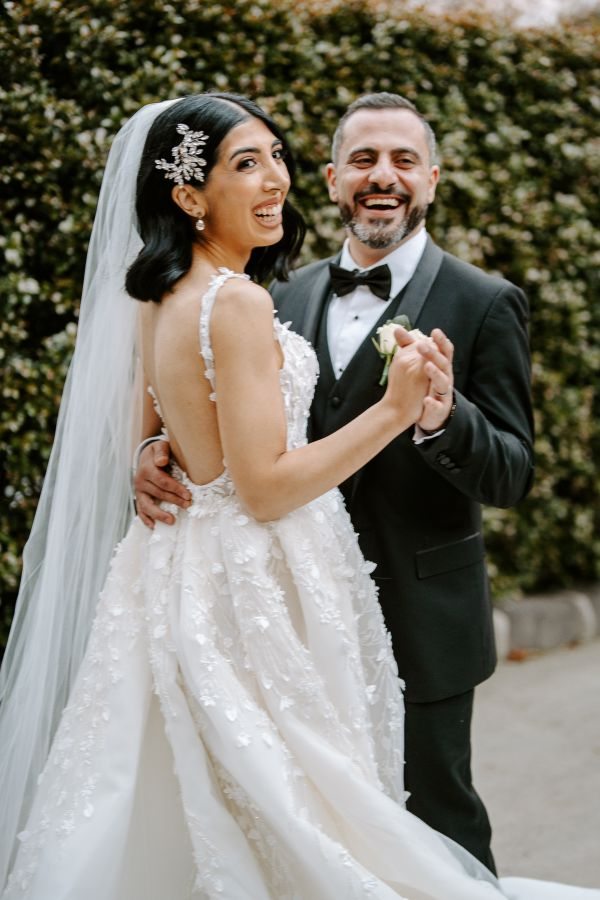
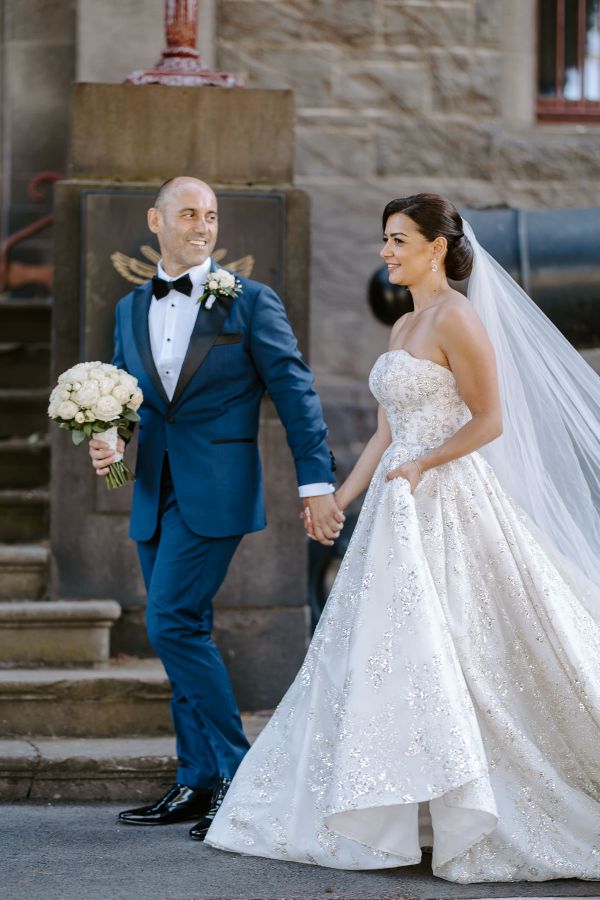
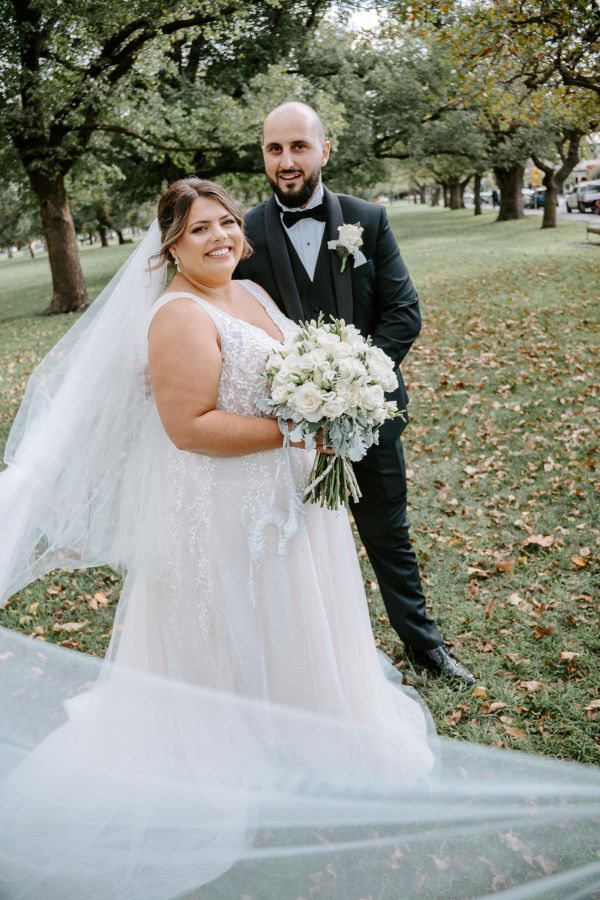
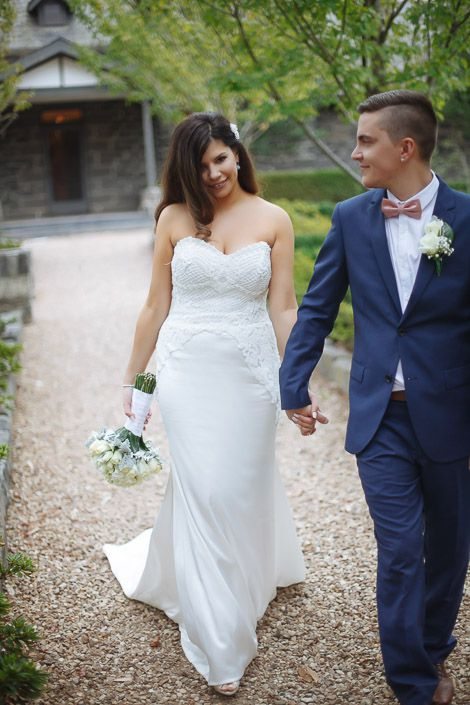
Photographing a wedding at Meadowbank Estate
The basalt walls take side light well in the afternoon, so we stand couples close to the house and let the dormers fill the frame. The big trees carry shade for family groups in the middle of a summer day. Wet weather is straightforward: the ballroom opens onto the pool terrace, and we shoot under cover with the water behind. Keep ten minutes after sunset for a frame from the garden looking back at the lit windows.
Read the wedding venue guide
A day at Meadowbank
Most of a Meadowbank wedding can stay on the one estate. Vows are set on the lawn beside a low bluestone wall under big old trees, and walking in through the stone gateposts makes a graceful entrance. From the aisle, the gravel path takes you past the dark stone manor, an old farmhouse at the heart of the grounds, and on to the giant pine for portraits while guests have drinks. Each ballroom looks over its own garden, the pond or the pool. Most couples get ready at home, and the manor lounge, with its chandelier and stained glass, makes a warm room for family groups.
Melbourne’s north through the year
Summer out here is warm to hot, and daylight lasts until well after eight, so there is time for a city portrait stop and still an evening glow back at the estate. Autumn is gentler, with mild afternoons, but by late autumn the sun is gone by half past five. Winter brings cold air, a breeze down the open drive and darkness soon after five, so bring a coat for between frames. Spring swings between sunshine and showers. If rain sets in, the vows move inside and the manor lounge becomes the portrait room.
Light, shade and sound
Bright cloud is the kindest sky on these lawns, spreading even light over faces and white drapes with no hard shadows. On a sunny day the gum canopy along the drive filters the glare, and as the sun sinks it comes in low through the tall trees, so we keep it behind you to light the veil and hair. Dark basalt soaks up harsh sun, so the manor walls work at any hour. After dark the uplit trees give a glowing night portrait in minutes. On an open lawn a breeze carries words away, so a microphone on the celebrant helps your videographer and the back row.
Planning tips
If your church is across town, build the drive north into the timeline and try to arrive before your guests, so you have the courtyard and the drive to yourselves for a few calm minutes. In winter, head straight for the drive and the pavilion as soon as the car stops, while warmth is still in the sky, and save the indoor groups for the manor lounge. Gravel and lawn favour block heels. For sparklers, wait for dusk, when there is still blue in the sky, and keep it to the bridal party. Then slip outside during dinner once the lanterns and garden lights are glowing.