St Joseph’s Church Subiaco Wedding Photos
Pointed arches, tall lancet windows and a bright domed sanctuary in Perth’s inner west
St Joseph’s Church stands on Salvado Road in Subiaco, a few kilometres west of the Perth CBD. It opened in the mid-1930s to a design by Edgar Le Blond Henderson in the Interwar Gothic style and is on the State Register of Heritage Places. The parish has deep roots in the suburb: Subiaco takes its name from the Benedictine monastery Bishop Serra founded on this land in the 1850s.
Claire and George said their vows at the altar with their bridal party lined up on either side, kissed under the crucifix and came back down the aisle with Claire’s bouquet in the air, before heading to Cottesloe and on to a reception at Perth Town Hall.
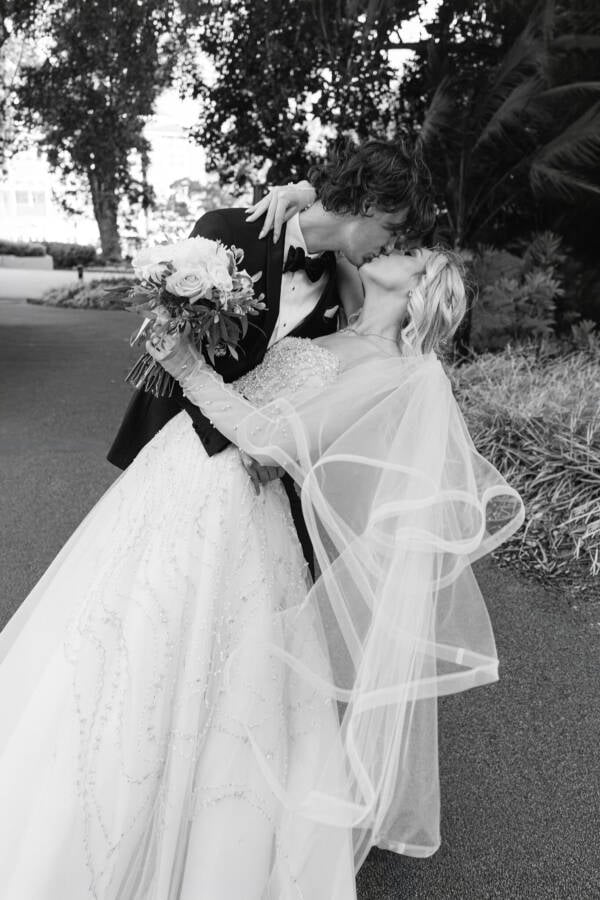
Photographing a wedding at St Joseph’s Church
White walls and tall windows keep the sanctuary bright, so we photograph by daylight alone, working quietly from the aisle and the side walls with a long lens for faces and a wide one for the whole church. The arches and the domed sanctuary give the first kiss a grand frame. Out the front, the red brick facade makes a strong backdrop for the cheers, the hugs and a family group.
Read the wedding venue guide
A church wedding at St Joseph’s
A wedding at St Joseph’s is the ceremony part of a longer day. You marry in the inner west, on Salvado Road a few kilometres from the city centre, and the reception happens somewhere else, a town hall, a restaurant or a room by the river. Inside, the nave runs under pointed arches and tall lancet windows to a bright domed sanctuary, where the bridal party lines up either side of the altar and the first kiss gets a grand frame. The red brick front is where the cheers, the hugs and the family groups happen. Getting ready is done at home or in a city hotel.
Seasons in the west
The city has hot, dry summers and mild, wet winters, and a church ceremony sits comfortably in all of them because the vows are under a roof. In summer the footpath out the front is bright and warm mid afternoon, so keep the groups quick and enjoy light until past seven. Late spring is jacaranda time, when streets across the suburbs turn purple for the getting ready photos. Winter is mild rather than cold, but the light is gone soon after five, so portraits must follow the ceremony straight away. If it rains, the arches and the bright sanctuary carry every portrait.
Light inside and out
White walls and tall windows make this a bright church by daylight, which is rare and welcome. We work by that light alone, quietly from the aisle and the side walls, a long lens for faces and a wide one for the nave and the dome. The brightest frames come from the sanctuary end, so give the first kiss a beat before you turn for the aisle. Out the front the sun is often high and hard, so we turn the groups away from the glare. On hot days the sea breeze arrives late and lifts a veil on the steps. A microphone still helps your videographer with soft vows.
Planning the rest of the day
Because the reception is elsewhere, the hours between the vows and dinner are yours, and the best use of them is a drive west to the coast for the pines, the lawns and the sand, then back into the city for a garden with big trees and open shade near the reception. Allow about two and a half hours for portraits across a beach and a city stop, including the driving. Flat shoes for the sand, heels for the hall. In winter cut that to one stop and go straight after the vows, while the light holds.