Rippon Lea Estate Wedding Photos
Patterned brick, a lake with its own bridge, a fernery in the shade, and a 1930s pool
Rippon Lea Estate on Hotham Street, Elsternwick, is a National Trust mansion about ten kilometres from the Melbourne CBD. It was built in the late 1860s for Frederick Sargood to a design by Joseph Reed, in polychrome brick in the Lombardic Romanesque style. The fourteen acres of garden include a lake, an iron-framed fernery, and the swimming pool and ballroom added in the 1930s. The estate passed to the National Trust in the early 1970s and joined the National Heritage List in the mid-2000s.
Cydnee and Darren had the bride’s preparation, ceremony, portraits and reception all on the estate; an earlier wedding did the same. Our notes from those days list the poolside terrace, the bridge over the lake and the fern garden as the portrait spots we kept returning to, with the ballroom for the reception.
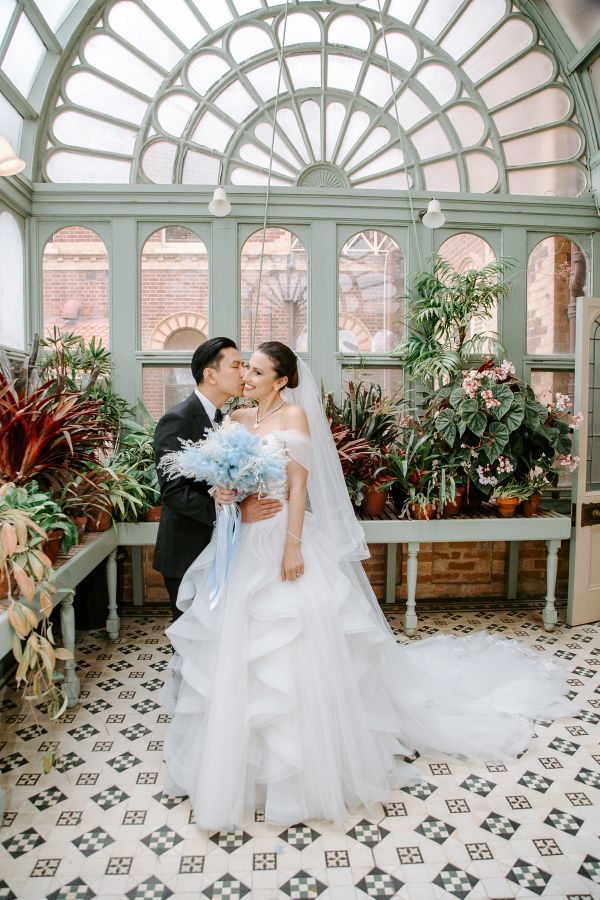
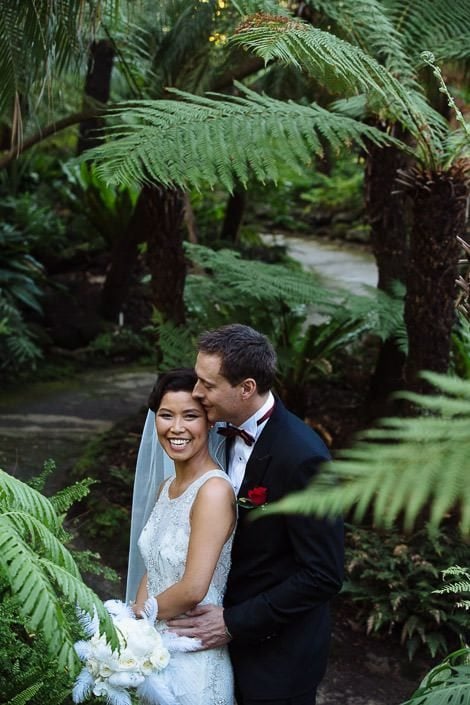
Photographing a wedding at Rippon Lea Estate
The fernery is the answer to harsh midday sun: it is deep shade with green light, and it works in any weather. The lake and its bridge face open sky, so hold them for the last hour before sunset. The ballroom opens onto the poolside terrace, which means guests drift outside for drinks and the candid work is easy. The estate is open to the public by day, so portraits on the front lawns need patience. The galleries above are full Rippon Lea weddings.
Read the wedding venue guide
A day on the estate
Rippon Lea lets the whole day happen in one place, with no cars between moments. There is a bridal suite inside the mansion, so you can arrive in one outfit and change just before the aisle. Vows are usually on a lawn: the Central Lawn puts the patterned brick and the tower behind you, while the Western Lawn sits under huge old trees. Groups gather on the grass or out front, then portraits loop past the pool garden, the rose garden balustrade, the lake bridge and the fernery. Dinner and dancing fill the ballroom beside the pool terrace.
Melbourne seasons in the garden
Summer gives long, warm evenings with light until well after eight, and the old trees matter then: open lawn in full sun gets hot for guests, while a ceremony under the canopy stays comfortable. Autumn is a favourite, as the elms and oaks turn and low light slants across the grass. Winter is cold and often grey, dark not long after five, so keep portraits close to the house and the conservatory. Spring can swing between sun and showers in one afternoon. If rain comes, the pool deck can hold the vows, and the porch, conservatory and corridors carry the portraits.
Light, shade and sound
On a clear day the lawns are bright and contrasty until mid afternoon, so a later ceremony under the trees lets us put the sun behind you, flaring through the leaves. Anything that sparkles hung in the branches will shimmer in that backlight. A grey sky is just as kind, with open faces and lace that keeps its detail. The bridges glow in the last hour of sun, and the fernery stays soft and green at any hour. After dark the ballroom runs on chandeliers and coloured stage light. For garden vows, a microphone on the celebrant gives your videographer every word.
Planning tips
Let the portrait route follow the sun: the house and the cast iron porch first, the pool pavilion and rose garden next, the bridge for the warmest light and the fernery to finish. Give that loop a generous stretch of your timeline, because it is a stroll on gravel and grass, and block heels will thank you. The grounds are open to visitors by day, so expect a few onlookers out front and a little patience from us. Save some energy after dinner for a short walk outside, where the lit terrace, stone doorways and glowing glass dome give a whole new look.