Canberra Nara Peace Park Wedding Photos
Cherry trees, a timber gate and an eight-metre pagoda on Lake Burley Griffin, a gift between sister cities.
Canberra Nara Peace Park is the Japanese section of Lennox Gardens, on Flynn Drive in Yarralumla on the southern shore of Lake Burley Griffin. It marks the sister-city relationship between Canberra and Nara, with a traditional wooden gate and gazebo, an eight-metre pagoda, cherry trees and Kasuga stones presented by Nara in the late 1990s, laid out on the borrowed-landscape principle so the lake, Black Mountain and Mount Ainslie read as part of the garden. Each October it hosts the Canberra Nara Candle Festival.
Shara and Geveen came here for portraits after their ceremony at the Brassey Hotel in Barton, a few minutes away. The park gives you three settings in a short walk: the gate and pagoda for structure, the lawns under the cherries, and the lake edge with the city and the mountains behind. Lennox Gardens itself was named in the early 1960s when the lake was filled, and a Rotary Peace Bell was added in the late 2010s.
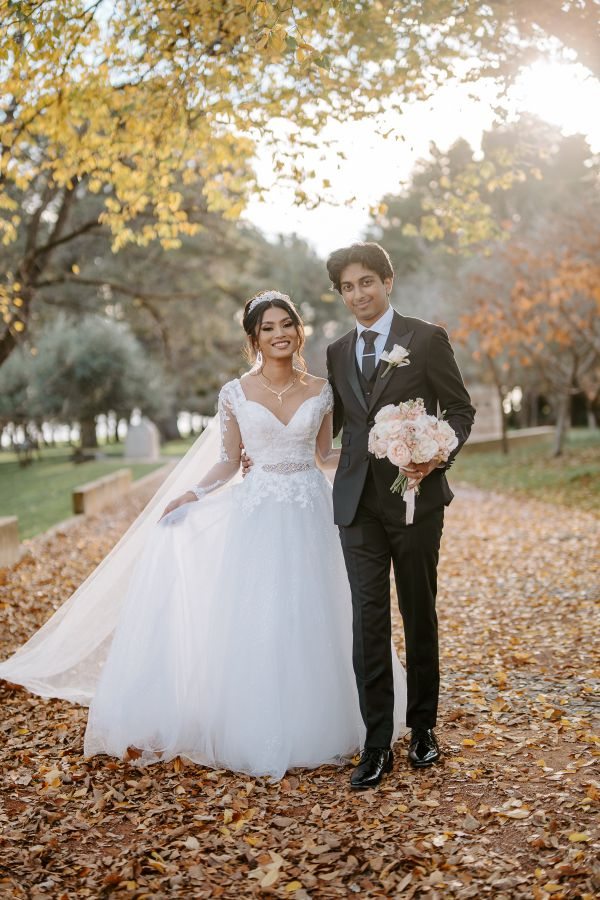
Photographing a wedding at Canberra Nara Peace Park
Spring, when the cherry trees flower, is the obvious time, but it is busy; weekday mornings are quieter. The lake lies to the north, so an afternoon session puts the sun behind the couple with the water as a bright backdrop, and the last half hour before sunset is the best of it. The pagoda and gate hold their lines in any light. It is a public park, so keep group sizes modest and expect other visitors. Wet weather: the gazebo. The gallery above is Shara and Geveen’s wedding.
Read the wedding venue guide
A portrait stop on the lake
Couples come to Nara Peace Park for an hour of portraits between the vows and the reception, usually from a hotel or garden ceremony a short drive away in Barton or Yarralumla. Three settings sit within a few minutes’ walk. The red and gold gateway, the timber gazebo and the steel pagoda give you strong shapes and colour. The lawns and the long red gravel avenue under the trees suit walking portraits and a twirl. Then the lake shore opens out, with Black Mountain and its tower across the water and the hills beyond, for the wide, quiet frames to finish.
Canberra’s four seasons
Spring is when the cherry trees flower, and the park is at its busiest, so a weekday or an early start helps. Summer is hot and dry, the open lake edge has little shade, and the light lingers until well after eight. Autumn is the other great season here, when the avenue fills with yellow leaves and the canopy glows, but the afternoons are short and cool. Winter is cold and crisp with bare branches and dark before five, so plan portraits soon after an early afternoon ceremony. If a shower comes through, the gazebo gives you shelter for a few frames.
Backlight, water and glare
The lake lies to the north, so from mid afternoon the sun sits behind you as you face the camera with the water beyond. That backlight makes leaves glow overhead, turns a veil into a soft screen and flares beautifully at the shore in the last half hour before sunset. It also means a bright, shining lake behind you, so hold your bouquet low and keep your faces clear of it. The gate and pagoda keep their lines in any light. There is often a breeze off the water, and few quiet corners, so save spoken words for somewhere calmer than the shore.
Planning tips
Allow a short drive each way from Barton and about an hour in the park itself. Keep the group to the two of you, or a small bridal party, because other visitors share the paths, especially in blossom season. Red gravel and leafy lawns are kinder to block heels than stilettos, and a long veil looks lovely spread across fallen leaves. In autumn and winter, pack a warm wrap and leave the car close, because the sun drops fast once it reaches the trees. Finish at the water’s edge, where the mountains and the low sun give you the closing frames.