Clarendon House Wedding Photos
An 1830s Georgian house on the South Esk, with an elm avenue, a walled garden and a two-storey portico
Clarendon House is a National Trust property on Clarendon Station Road at Nile, near Evandale in northern Tasmania, about ten minutes from Launceston Airport. The house was built in the late 1830s for James Cox, a wool grower and merchant, in Georgian style with a double-storey portico, and sits on seven hectares of parkland on the South Esk River. The grounds include an avenue of elms at the entrance, a walled garden that was once the kitchen garden, convict quarters and rural outbuildings.
Veri photographed Rosie and Sam’s wedding here from the morning through to the reception: getting ready in the house, the ceremony and bridal party portraits in the grounds, and the celebration on the estate. It is the kind of place where the building does the work. The columns of the portico, the elm avenue and the walled garden give the day a scale and formality that suits a full-day wedding.
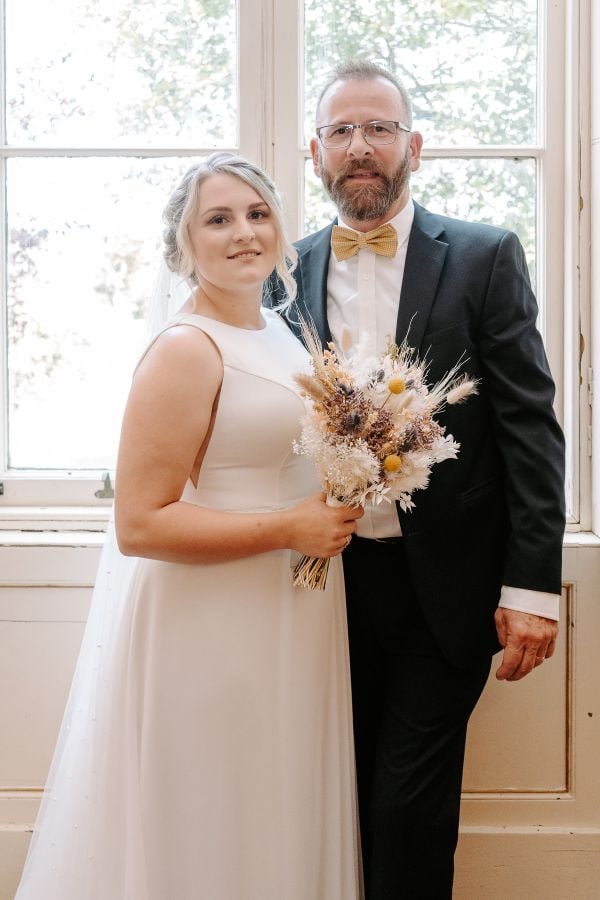
Photographing a wedding at Clarendon House
Tasmanian light is cooler and lasts longer into the evening in summer, so the elm avenue can be photographed late with the sun down its length. The portico gives shade at midday for the groups. Walk down to the river for a quieter frame, and use the outbuildings for the party. The house interiors, furnished to the 1840s, are the wet-weather option and photograph well by window light. The gallery above is Rosie and Sam’s wedding at Clarendon House.
Read the wedding venue guide
A day at Clarendon
Clarendon suits a full day on one property. The bridal party can get ready inside the house, among tall shuttered windows and deep window seats. From there you step through the brick doorway of the walled garden, cross the flagstones and walk to the lawn, where the vows sit under one huge spreading tree. Signing and family groups happen along the rose covered brick wall a few steps away. Portraits wander the gravel paths, the elm avenue and the forecourt below the columned portico, ending in the open paddock by the old farm buildings. For the celebration, the estate hires out its stone barn, its conservatory and the grounds.
Seasons in the Midlands
Northern Tasmania has real seasons, and Clarendon sits in open farm country, so you feel each one. Summer days are long and often bright, with light until well after eight, and the paddocks dry off to gold as the season goes on. Autumn turns the elm avenue and the old garden trees yellow, with crisp mornings and gentle afternoons. Winter is cold, frosty and short, with darkness before five, so marry early and keep portraits close to the house. Spring is green and fresh but showery. If the weather turns, the rooms of the house and their tall windows carry the portraits indoors.
Light, shade and wind
An afternoon ceremony in summer means a high, bright sun, so choose a spot with real shade overhead; the big tree keeps faces even while the paddocks and the far ridge stay bright behind you. Inside, we turn you side on to a shuttered window so the daylight wraps around your face and runs down the veil. As the afternoon goes on the sun drops behind the old trees for lovely backlight, and the portico looks best once the light softens. Breezes cross the open paddocks freely, so a sheer veil will fly. A microphone on the celebrant gives your videographer clean vows over the wind.
Planning tips
Allow a generous hour for groups and portraits. The walled garden, the forecourt and the paddock are all a short walk apart, so the time goes into photographs rather than travel. With little ones in the bridal party, give them a seat inside before the ceremony so they stay settled and happy. Gravel, flagstones and grass suit block heels far better than stilettos. On a bright summer day, set guest chairs in the shade of the trees and keep water nearby. Save the paddock walk for the very end, when the low sun turns the dry grass gold behind you.