Heide Museum of Modern Art Wedding Photos
Sixteen acres by the Yarra where the Reeds fed the Angry Penguins: a farmhouse, a modernist house, and forty sculptures
Heide Museum of Modern Art is on Templestowe Road at Bulleen, sixteen acres of heritage-listed land running down to the Yarra River. John and Sunday Reed bought the farm in the mid-1930s and made it home to the Heide circle of painters, Sidney Nolan among them. Heide I is the 1870s farmhouse; Heide II, built in the mid to late 1960s by McGlashan Everist, was designed as a gallery to live in. The museum opened in the early 1980s; the grounds hold more than forty sculptures and the Reeds’ kitchen garden.
Veri photographed BoBo and Isaac’s wedding at Heide from their first look through ceremony, portraits and reception, all on the museum grounds. Ceremonies are held in the heritage gardens and receptions in Heide Kitchen, the glass-walled café. The sculpture park gives a portrait walk unlike any garden venue in Melbourne: hard geometry, lawn, river gums and the white walls of Heide II.
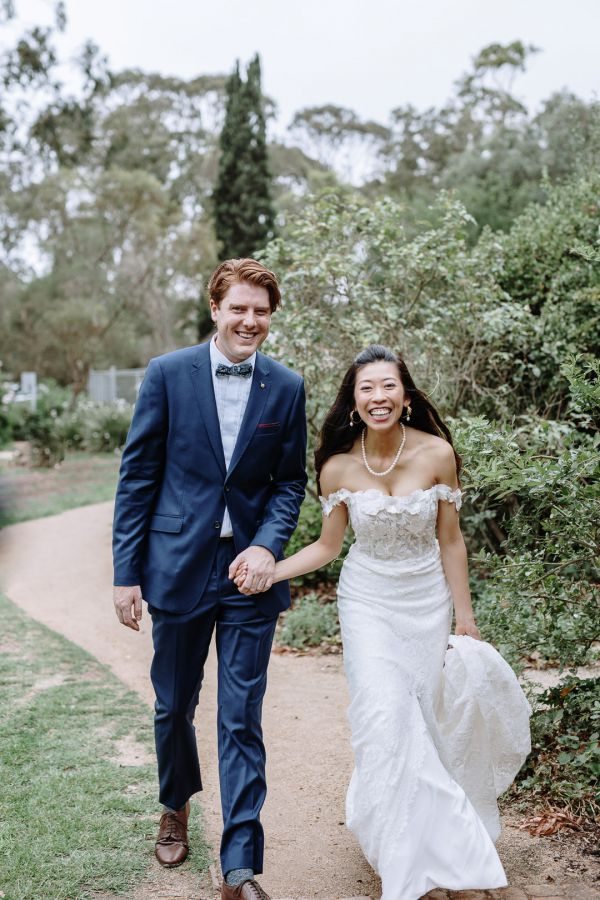
Photographing a wedding at Heide Museum of Modern Art
Heide is a public museum, so weekend afternoons have visitors on the paths; the river end of the sculpture park is quieter. The white limestone of Heide II bounces light and is the cleanest backdrop on the site, best with the sun behind it. The kitchen garden is good for the wedding party, and the old trees around Heide I cover the middle of the day. Heide Kitchen’s windows mean the reception stays bright until dusk. The gallery above is BoBo and Isaac’s full day.
Read the wedding venue guide
A wedding at Heide
A Heide day can run from getting dressed to the last dance without leaving the grounds. You can dress in a glass pavilion with the gardens soft outside, then walk a gravel path to an ivy wall for a first look. Portraits drift across the sloping grounds, from a sandstone lookout under the trees to a giant spreading tree on the lawn and the playful painted cows of the sculpture park. Vows are held in the gardens, in a shady glade by the river or under a pavilion roof, with groups on its covered deck and red timber steps. Dinner and dancing follow in Heide Kitchen.
Seasons by the Yarra
Summer brings long evenings, with light until well after eight, and the old trees keep the lawns cool through the heat of the day. The kitchen gardens are at their fullest through the warmer months. Autumn is gentle and golden along the river, a lovely time for portraits in the open. Winter is cool and short, with dark soon after five, so plan portraits early and lean on the glass rooms. Spring is green and full of showers that come and go. When rain arrives, the pavilions keep the ceremony dry, and a bundle of clear umbrellas keeps the garden portraits going.
Soft light under the canopy
Grey skies treat Heide kindly. Under cloud there are no harsh shadows beneath the big trees, the lawns turn a rich green and we can photograph you from any side. The canopy also keeps light soft at midday, while the open lawns and the river side shine in the last hour or two before sunset. The glass pavilion pulls in daylight from every direction, which keeps faces bright for dressing and vows. In Heide Kitchen, a single light behind you for the first dance turns spins and dips into glowing outlines. A small microphone on the celebrant gives your videographer clean vows outdoors.
Planning tips
A first look before the ceremony gives you a relaxed stretch in the gardens while things are still dry, which matters on a showery spring day. The grounds slope and most paths are gravel or grass, so flats make the walk easier, with heels saved for the ceremony and dinner. Ask for a quiet minute at the lookout after the first look before the portraits begin. Allow at least an hour after the vows for groups and portraits, plus walking time between spots. The far river end of the grounds stays calmer when the museum is busy.