Marybrooke Manor Wedding Photos
A 1940s mock-Tudor guesthouse on the edge of Sherbrooke Forest, with a chapel, a gazebo lawn and rooms upstairs
Marybrooke Manor is a National Trust-listed guesthouse and reception centre on Sherbrooke Road in Sherbrooke, about 30 km east of Melbourne in the Dandenong Ranges. Eric Dowdle built it in the 1940s as the grandest of his six mountain guesthouses: four storeys, timber-framed, mock-Tudor, with a curved bedroom wing. During the war the Royal Children’s Hospital used it to house nurses and staff from a nearby children’s rest home; it later ran the Baron of Beef restaurant from the late 1960s to the late 1980s, and was renovated from the early 1990s into the hotel and wedding venue it is now.
We have photographed weddings at Marybrooke Manor. The eight-acre grounds sit right against Sherbrooke Forest, so ceremonies happen on the gazebo lawn under the canopy or in the indoor chapel with its fireplace and garden windows. There are 20 suites on site plus a cottage, which means the morning preparation, the ceremony, the portraits and the reception all happen without a car trip in between.
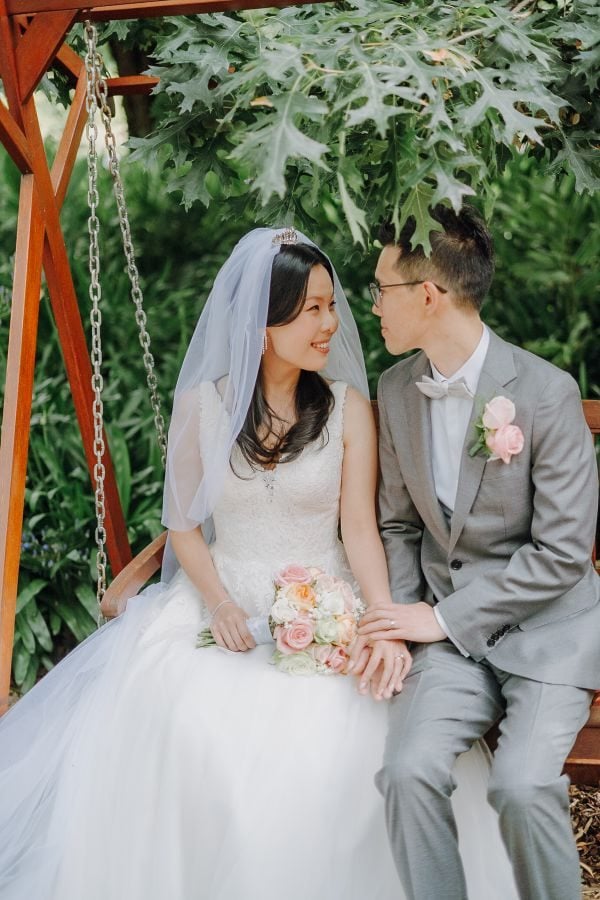
Photographing a wedding at Marybrooke Manor
The forest keeps the light soft and green for most of the day, so midday portraits work here when they would not elsewhere. The heritage drawing room is the spot for quiet frames if the mountain mist rolls in, and the chapel is the standing wet-weather plan. Sunset arrives early behind the ridge in winter, so we bring the couple session forward by half an hour. The Tudor front with its timber and gables reads best from the driveway side.
Read the wedding venue guide
A day under one roof
At Marybrooke the whole day stays in and around the manor, an old mountain guesthouse full of timber beams and panelled rooms. You get ready in the suites upstairs, some with balconies over the tree ferns and lawn, then marry either in the chapel, whose curved bay of windows looks straight into the forest, or outside on the gazebo lawn under tall mountain ash. Family groups fit in the chapel or on the lawn below the balcony. Portraits wander past the timber swing, stone steps, hedged paths and the driveway, and dinner and dancing are downstairs in the Grendon Room under chandeliers.
Seasons in the Dandenongs
Up in the hills it usually runs cooler than the city, and the forest holds damp air, so even a summer evening can turn crisp. Pack a wrap whatever the month. Summer gives light until well after eight, and the canopy keeps the lawn shaded through the afternoon. Autumn brings cool days and, often, mist drifting through the trees. Winter is cold and frequently wet, with darkness soon after five and earlier still under the ash, so the fireplaces and the chapel carry the day. Spring is lush and showery. In any weather, the chapel, drawing rooms and panelled corridors give you covered backdrops.
Light under the forest
Tall trees filter the sun for most of the day, so the light around the manor is gentle and faintly green. That means portraits can work even in the middle of the day. Indoors, the tall paned windows give soft side light for getting ready, and in the chapel we stand you with your backs to the glass so the forest outside turns pale and fresh. The canopy takes the direct sun off the gardens well before sunset, so build your timeline around open shade rather than a golden hour. For a lawn ceremony, a microphone on the celebrant keeps your vows clear for guests and your videographer.
Planning tips
A big group shot from the balcony, looking down on everyone gathered on the lawn, takes a few minutes to set up, so put it on the run sheet. Follow the groups with a short garden walk while guests settle, then keep a quiet half hour for family in one of the lounges before the reception. In winter, start the couple portraits soon after the vows. Stone steps, gravel and damp lawns are easier in block heels, and a small towel in the bridal suite rescues a hem after wet grass.