Mona Farm Wedding Photos
An 1830s farm outside Braidwood: a lake, a Palladian bridge, oaks and elms, and sculpture in the paddocks
Mona Farm is a 124-acre estate on Little River Road at Braidwood, an hour from Canberra. It was taken up in the mid-1830s as Braidwood Farm by Dr Thomas Braidwood Wilson; the homestead dates to the early 1850s, and the Maddrell family later renamed it Mona. Owners in the 1990s dammed Mona Creek to make the lake and its Palladian bridge. Since the late 2010s it has run as a wedding and accommodation venue: a converted wool shed for receptions, a chapel, seven guest houses and sculpture through the grounds.
Veri’s Canberra team photographed Erica and Matthew’s wedding at Mona Farm from getting ready through to the reception, all on the property. That is the shape most couples choose here: dress in one of the historic houses, walk to the ceremony, portraits across the lawns and lake, then dinner in the wool shed. Nobody leaves the farm all day.
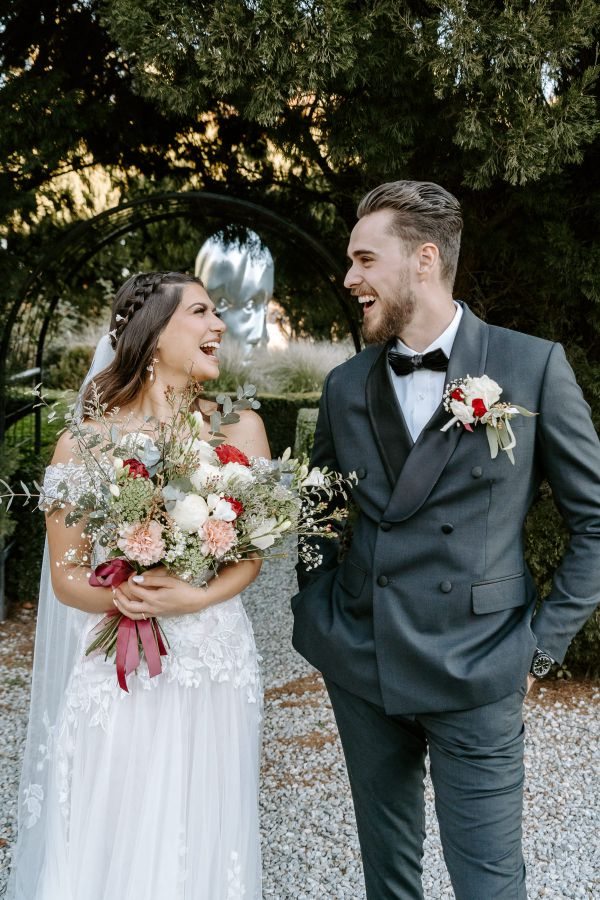
Photographing a wedding at Mona Farm
Braidwood sits high and the light is clear and cool, so the hour before sunset over the lake is the one to protect. The bridge gives a clean line for the couple with water either side, and the old trees give shade for group photos earlier in the day. The sculptures make good anchors for a walking portrait session. The chapel and wool shed both cover rain. The gallery above is Erica and Matthew’s full day at Mona Farm.
Read the wedding venue guide
A day that stays on the farm
At Mona Farm nobody needs a car once the day begins. You can dress in the Homestead, with tall French doors opening onto an iron balcony, while the groom’s party gets ready at the New Stables, both a stroll from the lake. Vows are usually on the Croquet Lawn at the water’s edge, with a fountain plume behind the guests and the stone bridge in view. You can arrive hidden behind the cypress hedge and step through its iron arch. Groups follow beside the hedge, portraits drift along the lake, the old trees and the sculptures, and dinner is in the converted Woolshed.
Tableland seasons
Braidwood sits high on the tablelands, so the air is cooler and clearer than on the coast or in Canberra. Summer afternoons are bright and warm, with daylight until after eight, so the best portraits come late. Autumn is the showpiece, as the oaks and elms turn orange and drop their leaves across the lawns and paths. Winter is cold and short, with dark before five, and every guest will want a coat by sunset. Spring brings fresh green to the paddocks. If the weather turns, the chapel and the Woolshed keep everyone dry, and the Homestead doors still give lovely light.
Light on the lake
Clear tableland sun is strong in the early afternoon, so we use the hedges and old trees for shade during the groups and keep the open lawns for the low sun. As the light drops, long shadows stretch across the aisle and the old trees glow orange. For the bridge, the lakeside lawn in the last hour is the view to protect; at dusk, step onto the bridge itself and the sky turns you into a simple outline. Indoors, single beams of window light make the getting ready frames. The fountain and a breeze off the water can blur vows, so a microphone on your celebrant is worth it.
Planning tips
Leave a generous stretch after the ceremony, because in autumn the richest light comes and goes quickly once the sun drops behind the trees. Ask someone to gather your train as you cross gravel paths and fallen leaves, and keep warm jackets on hand for bridesmaids and little ones as the afternoon cools. Block heels cope better with lawn and gravel. Use the sculptures for a quick, playful frame between groups. If your invitations feature a favourite corner of the estate, tell us early so we can plan to end the portraits right there.