Royal Botanic Garden Sydney Wedding Photos
Thirty hectares on Farm Cove, with the Opera House at the end of the lawn
The Royal Botanic Garden Sydney was founded in the 1810s by Governor Macquarie and runs to 30 hectares on Farm Cove, between Macquarie Street and the harbour. The Opera House sits on its northern boundary and a hand-cut sandstone seawall curves around the cove. A dozen named ceremony lawns are hired out: Australian Rockery Lawn with the Opera House behind, Harbour View Lawn under a big fig, and the Palace Rose Garden with its 1890s pavilion, where the Garden Palace burnt in the early 1880s.
Nicole and Michael married in the Garden and stayed for portraits, then held their reception at the Palace Rose Garden pavilion. The Rockery Lawn and the Fleet Steps are other spots Veri has worked here, and the shape of the day is simple: vows on a lawn with the harbour behind, a walk along the seawall and up through the roses, and dinner inside the Garden or a short taxi ride into the city.
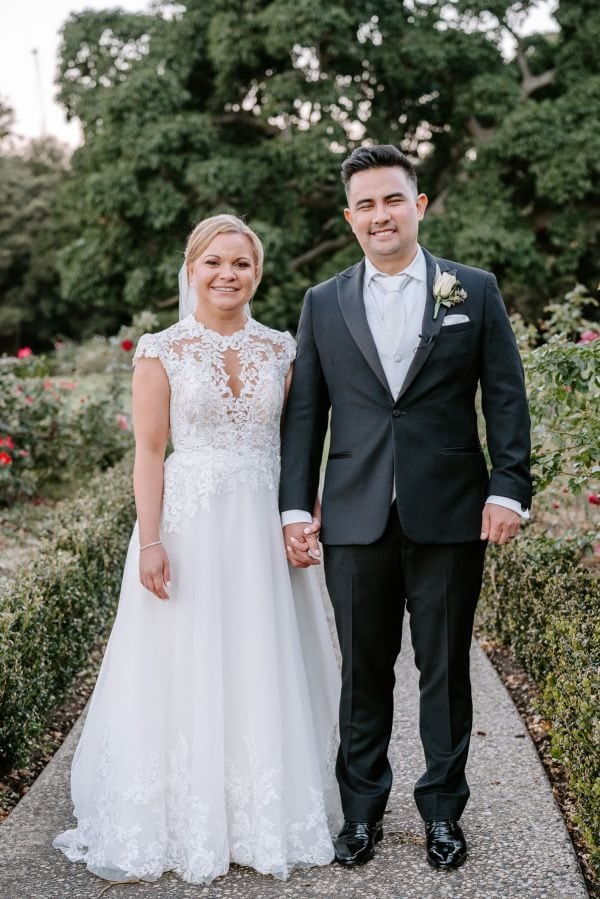
Photographing a wedding at the Royal Botanic Garden Sydney
Harbour-facing lawns get the afternoon sun from behind the couple, which is what you want, but they are public and busy, so an earlier ceremony on a weekday is calmer. The seawall path gives a long clean walk with water on one side, and the figs on the Harbour View and Fig Tree lawns throw useful shade at midday. The Palace Rose Garden pavilion is the sensible cover if it rains. The gallery above is Nicole and Michael’s Royal Botanic Garden wedding.
Read the wedding venue guide
A wedding in the Garden
Couples get ready at home or in a city hotel, then marry on one of the Garden’s lawns, each with its own outlook: the harbour and the Opera House, a great fig, or the roses beside the sandstone Shelter Pavilion. In the Palace Rose Garden you arrive down stone steps between urns, with city towers above the treetops, and stand under an arch set against an old tree. Groups stay on the same lawn, then portraits wander the hedged rose paths, the big lawns and the seawall. Dinner can be at Botanic House inside the Garden, in the pavilion, or a short drive into the city.
Sydney seasons in the Garden
The roses flower from September into May, so spring and early autumn give you the fullest beds. Summer is warm and often humid, with light until about eight and the odd afternoon storm, so the old trees and the pavilion columns are welcome shade for guests. Autumn is gentle, and by late in the season the sun is low soon after the vows, sending warm light through the trees. Winter is mild and often clear, but dark comes close to five. A breeze off the harbour can lift veils on the open lawns. In rain, the pavilion keeps you dry and the glass room at Botanic House stays green.
Light from lawn to blue hour
The sandstone pavilion gives warm, shaded texture at any hour, a good place to start if the afternoon is bright. As the sun drops, low light slides across the rose beds and the hedged paths, and the big lawns glow. Just after sunset comes the short blue hour, when office lights come on in the towers rising over the trees, so we walk you to a garden road with a clear view of them. After dark, a single lamp or the lit glasshouse of The Calyx is enough for one last frame. On a public lawn, a microphone for the celebrant and readers keeps your words clear.
Planning tips
The Garden is big, so build walking time into the portrait hour and pick two or three spots rather than trying to see everything. Ask one helper to carry drinks and posies so little ones have free hands. Shoes that cope with lawn and gravel paths make the walking easy. In autumn and winter, go straight from the family groups into portraits so you reach the towers while the sky still holds colour. Moving your ceremony arch to the reception gives the flowers a second life. A weekday or earlier ceremony means fewer visitors drifting through your frames.