St Andrews Beach Wedding Photos
Bass Strait surf, a dune-top car park and a steep sand track down to open water
St Andrews Beach is an ocean beach on the Bass Strait side of the southern Mornington Peninsula, inside Mornington Peninsula National Park between Rye Ocean Beach and Gunnamatta. It is part of the 35-kilometre run of surf beach from Cape Schanck to Portsea, about 5 kilometres from Rye and roughly 70 from Melbourne. The car park at the end of Paradise Drive sits high behind the dunes and a short sandy path drops steeply to the water. It is unpatrolled and the rips are serious.
Veri photographed Simone and Sam’s portraits here between their ceremony at Rye Ocean Beach and their reception at St Andrews Beach Recreation Hall, which is the natural shape of a beachside wedding on this stretch: everything within a few minutes’ drive. The beach gives open sand, rock pools at low tide and dune grass behind, with the surf as a constant backdrop and very few other people in frame.
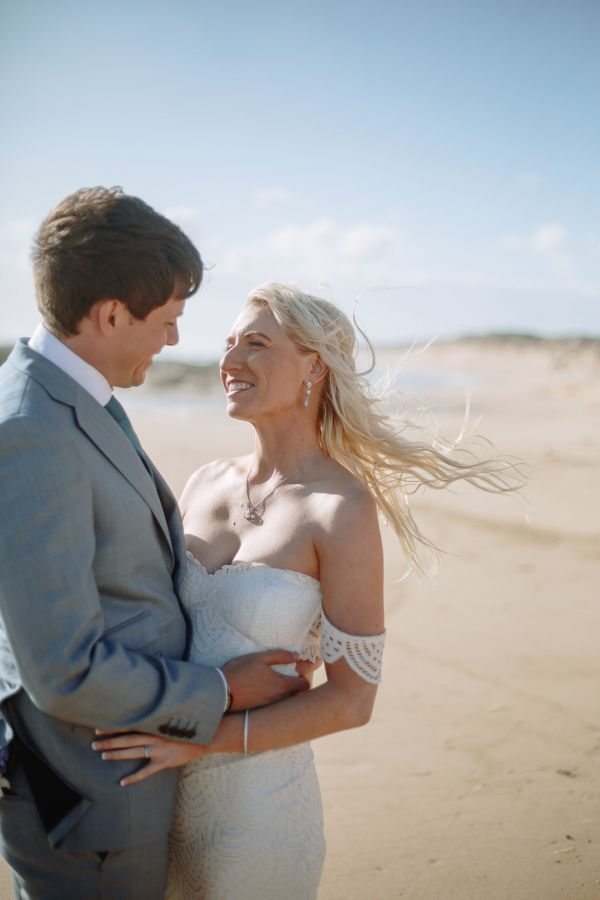
Photographing a wedding at St Andrews Beach
Come in the last hour before sunset, when the sun is low along the beach and the dunes go gold behind the couple. Check the tide first: low water opens the rock pools and gives firm sand to walk on. The car park above the dunes is the easy wide frame when the wind is up, which is most afternoons. Stay on the marked path, since hooded plovers nest in the dunes. The gallery above is Simone and Sam’s peninsula wedding, with their portraits on this beach.
Read the wedding venue guide
Portraits on the back beach
St Andrews Beach is a stop for portraits rather than a place to marry or dine. Couples come here between vows on the sand nearby and a reception close by, all within a few minutes’ drive. From the car park on the dune top, a steep sandy track drops through coastal heath to the water. At the bottom, the long sand gives way to a flat rock shelf with tidal pools and reefs, and white surf breaks behind. The dune top and the track give you small, windswept frames in a big landscape, and the shoreline makes an easy barefoot walk with your wedding party.
Bass Strait through the year
This coast faces straight onto Bass Strait, so expect wind in every season and weather that can turn within the hour. Summer brings long days with light until well after eight, warm sand and a sea breeze that builds through the afternoon. Autumn is often calmer, with softer light on the rocks. Winter is cold and raw, with heavy swells and the sun gone soon after five. Spring can be wild and showery. There is no cover on the sand, so keep a dry plan for the vows and watch the sky for a clear window to head down.
Wind, light and the rock pools
In the late afternoon the sun sits out over the water, so we shoot into it and let the still pools mirror the sky. Cloud racing in off the strait gives moody grey green surf, and when it clears the low sun puts a bright edge on hair and dresses. The wind will lift every veil, train and curl, and we lean into that movement rather than fight it. Sound is the hard part. Surf and gusts swallow words, so vows on a beach need a microphone on the celebrant and a quieter moment for your videographer.
Planning tips
Plan this stop around a falling tide so the rock shelf and pools are exposed. Tell guests to pack a proper jacket, and bring blankets for older guests at any ceremony on the sand. Bare feet are easiest on the rocks and the steep track, so keep a towel and a bag for shoes in the car. Walking the track in a gown takes longer than it looks, so give this stop time on both sides. The water is unpatrolled with strong rips, so portraits stay on the sand and rocks. For a final frame, the scrub-lined tracks behind the dunes catch the sunset glow.