St Ignatius Church Wedding Photos
Wardell’s bluestone church on the top of Richmond hill, with a 65-metre spire finished in the late 1920s
St Ignatius’ Church stands on Church Street at the highest point of Richmond, a Catholic parish church in the care of the Jesuits. William Wardell designed it and the foundation stone was laid in the late 1860s; the parish marked 150 years in the late 2010s. It is Gothic Revival in local bluestone, 63 metres long, with room for around 2,000. The spire by Gerald Vanheems went up in the late 1920s and, at 65 metres, was the tallest structure in Australia when it was finished.
Veri photographed Ricky and Fransiska’s wedding here. A church on the highest ground in the suburb gives the photographer a spire that shows from well beyond the parish and a wide sky behind the doorway. Richmond is a few minutes from the CBD and from the Yarra, so receptions tend to be in town or along the river, with portraits fitted in between.
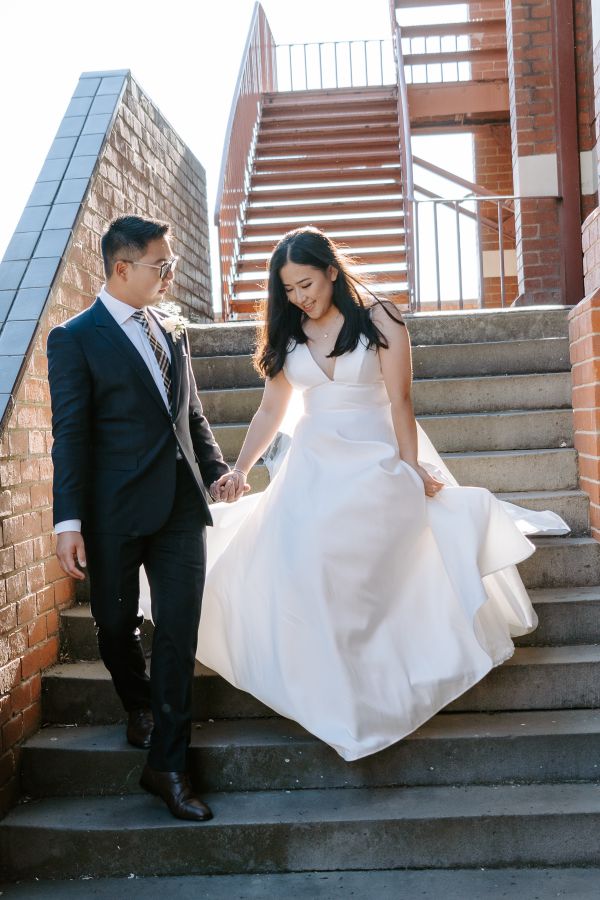
Photographing a wedding at St Ignatius Church
Bluestone reads dark, so expose for the faces and let the walls fall away; the nave is long, and a 70-200 from the back keeps the couple large in the frame at the altar. The doorway exit with the spire above is the shot to be outside for, and Church Street is wide enough to get the whole height in. Rain is no problem inside. The gallery above is Ricky and Fransiska’s wedding at St Ignatius.
Read the wedding venue guide
A wedding at St Ignatius
At St Ignatius the church holds your vows, and the rest of the day happens elsewhere. Most couples get ready at home or in a city hotel only a short drive away, then arrive at the doors on Church Street. Inside, the walk in runs the full length of a long nave between bluestone columns, ending at red carpeted steps below a carved white altar. Family groups often happen right there on the sanctuary steps after the signing, then everyone spills out to the forecourt. Guest groups line up along the side wall by the roses, and nearby laneways and stairs suit a short portrait walk before a reception in town or by the river.
Seasons on the hill
The church shelters you in any season, so the weather mostly shapes the time outside. Summer brings long, warm afternoons with light until well after eight, and a sunny forecourt can be hard on guests in dark suits, so keep water close. Spring and autumn are mild and changeable, with Melbourne showers that come and go within an hour. Winter is cold and often grey, with darkness soon after five, so family groups and portraits should follow the recessional straight away. On a wet day we simply bring the groups back inside under the arches.
Light inside and out
Bluestone is dark, so the nave feels bright on a sunny afternoon and much dimmer under cloud, and we come ready for both. The stained glass over the main doors glows behind you as you arrive, while the white altar and red carpet throw warm light back onto your faces at the front. Outside, the hill gives open sky behind the doorway and the spire. Midday sun is hard and high, so the softest portraits come later, when a low sun sits behind you between brick walls. A long stone church echoes, so a microphone at the lectern and on the officiant gives your videographer clear words.
Planning tips
Leave a good stretch of time after the ceremony, because a big church crowd takes a while to gather for groups. For a long list of guest groups, line people up along the side wall and hedge, which keeps the doorway clear and every frame matching. Ask a friend to hold guests on the steps for a moment as you walk out, so the spire stays clear above you. Save the end of your portrait time for the laneways when the low sun lights the brick, and look for a high spot nearby for the city skyline in late afternoon.