Sunnybrae Estate Wedding Photos
Bluestone from the 1880s, a wraparound verandah and a palm avenue, a short drive north of Adelaide
Sunnybrae Estate is a heritage homestead venue on Naweena Road at Regency Park, a short drive north of the Adelaide CBD. The land was bought in the late 1870s for the Islington Sewage Farm and the homestead, dairy, stables and outbuildings went up between the early and late 1880s. After years as a museum, the Liapis family took it on in the mid-2010s and restored the buildings, adding a free-standing marquee and, in the mid-2020s, the glass-walled Ìkos room. Ceremonies use The Walk, the Rose Garden or The Landing.
We photographed Shannon and Luke’s ceremony and reception here. Sunnybrae’s verandah wraps the homestead in shade and symmetry, made for formals, while the palms and lawns loosen everything up outside. We finished beside the old red brick building as the last warm light left the gardens and a small moon rose in a pale sky.
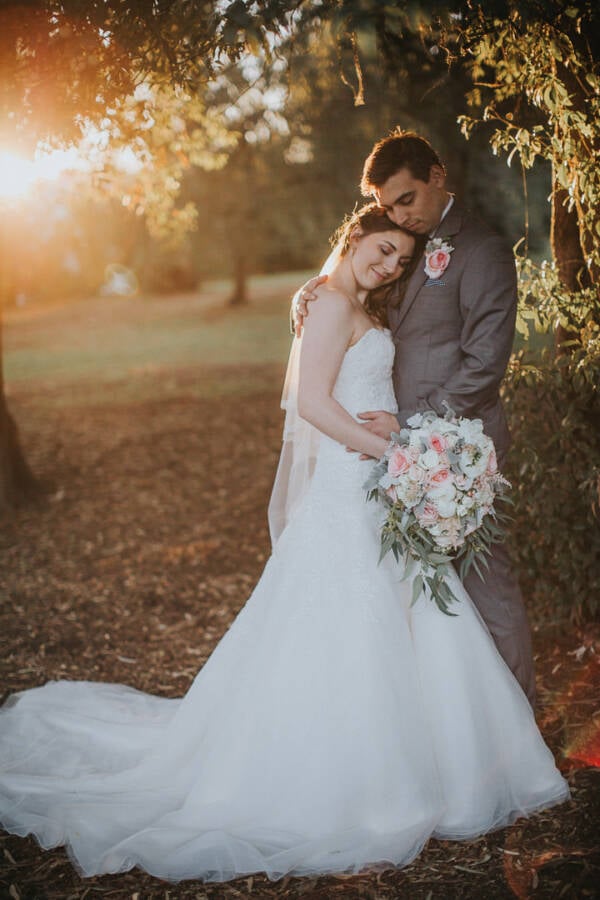
Photographing a wedding at Sunnybrae Estate
Sunnybrae’s garden ceremony and reception settings sit on the same estate. After the ceremony, Shannon and Luke photographed beneath the trees and beside the heritage buildings, then made a night portrait on a path lit by festoon lights. Shannon and Luke also walked Carlton Gardens in Melbourne with us for an engagement session before the wedding.
Read the wedding venue guide
A wedding at Sunnybrae
Sunnybrae is a cluster of old brick and bluestone farm buildings set in gardens a short drive from the city, and the whole day stays on the estate. Each reception room comes with a private room for the bridal party, so you can finish getting ready on site. Vows happen outdoors, in the Rose Garden, at The Landing or on the lawn under the big trees. Groups suit the verandahs and old walls, portraits wander beneath the trees and past the brick buildings, and dinner moves to the Coach House, the curved roof marquee or Ìkos, the sandstone and glass room looking over the gardens.
Adelaide through the year
Adelaide summers are hot and dry, with light until well after eight, so a later ceremony, shade under the trees and plenty of water keep guests comfortable. If you love colour, aim for late autumn and early winter, when the big deciduous trees turn yellow and orange and drop a carpet of leaves across the lawn. Winter is cool, often damp and dark soon after five, so portraits begin soon after the vows and a wrap or jacket is worth having. Spring brings the rose garden into bloom. If rain comes, the verandahs give a dry backdrop for groups and portraits.
Light under the big trees
In the middle of the day, the deep eaves and verandahs of the old buildings give open shade, so groups stay even and nobody squints. Under the trees the light filters through leaves, and in the last hour we put the sun behind you so it glows through your veil and the yellow canopy. Old red brick warms skin in low light, which is why we often finish beside it. After dark, festoon lights and paper lanterns warm the reception, and the lit garden paths give one more quiet frame. Vows under trees carry poorly to the back rows, so a microphone on the celebrant gives your videographer clean sound.
Planning tips
In winter, work backwards from sunset: a mid afternoon ceremony gives soft light for the vows, backlit portraits afterwards and dusk for the last frames. Allow about an hour for portraits, all within the grounds. A long train looks lovely spread across fallen leaves, so give it a moment. An unplugged ceremony keeps every face in the rows turned towards you rather than a phone. Lawns and leaf litter are kinder to block heels than stilettos. Save a few minutes late in the night to walk the festoon lit path together.