Bradleys Head Wedding Photos
A terraced amphitheatre on a wooded headland, a warship’s mast at the tip and the whole city across the water
Bradleys Head is a bush-covered headland in Sydney Harbour National Park at Mosman, named in the late 1780s after Lieutenant William Bradley of HMS Sirius. A sandstone gun pit from the late 1830s and early 1840s and the mast of the first HMAS Sydney, raised in the 1930s, stand at the tip. The terraced amphitheatre facing the city was built after Mission: Impossible 2 filmed here in the early 2000s. National Parks lets it for ceremonies of up to 120, with the Opera House and Bridge in view. There is no reception space.
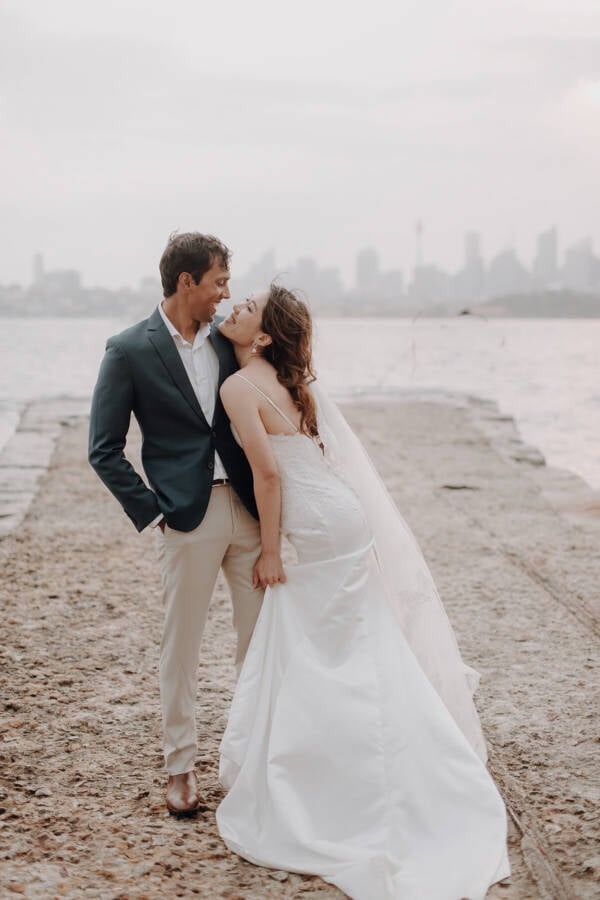
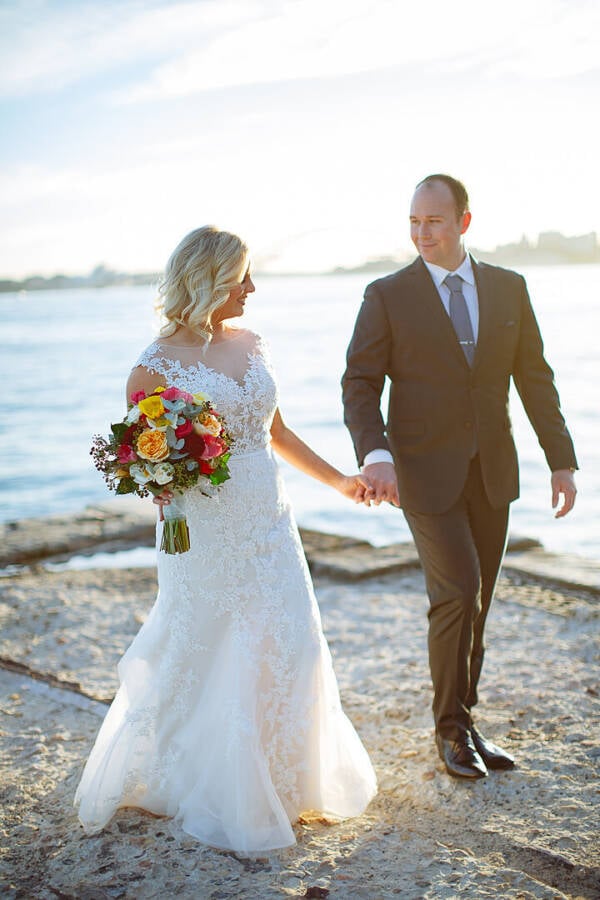
Jeannette and Pierre’s pre-wedding gallery ends with portraits on the rocks and stone jetty at Bradleys Head, overlooking Sydney Harbour. Sabine and Arthur married on the amphitheatre steps by the water, then walked the stone jetty with the Opera House and Bridge behind them before dinner at Bathers’ Pavilion.
Photographing portraits at Bradleys Head
Bradleys Head has a stone jetty and nearby rocks with the Sydney skyline across the harbour. Allow time to move between the spots before the shoot. The gallery above shows Sabine and Arthur’s ceremony at the amphitheatre and Jeannette and Pierre’s pre-wedding portraits.
Read the wedding venue guide
A wedding at Bradleys Head
Bradleys Head is a ceremony and portrait spot rather than a whole-day venue, which shapes the plan from the start. Vows are said on the lawned amphitheatre, with guests on the terraces above and the stone jetty and the water right behind you, the Opera House and the Bridge lined up across the harbour. Getting ready happens at home or in a hotel, and dinner means moving on, most often to a restaurant in the next bay, a short drive away. Family groups go on the jetty, and portraits move between the sandstone landing, the rocks and the sea wall, all within a few steps.
Through the year on the harbour
Summer is the easiest season for a late ceremony, with the sun still up well after eight and a sea breeze that arrives most afternoons, though the lawn has little shade and the sandstone throws heat back, so bring water and hats for guests. Autumn is settled and clear, our favourite time here. Winter days are short and crisp, with the sun gone before five and a cold wind across the point, so plan the ceremony early in the afternoon. There is no shelter on the headland, so a wet day needs a covered alternative booked somewhere nearby, and showers tend to blow through fast.
Light, glare and sound
The city sits across the water to the west, so through the afternoon the sun moves toward the skyline and finally drops behind it. For a mid-afternoon ceremony that means hard light and bright glare off the harbour, so we set the couple with the sun behind or beside them. The last two hours before sunset are the reward: warm side light on the jetty, a rim of light on hair and veil, and the towers glowing across the water. The breeze and passing ferries carry sound away, so ask your celebrant to use a small microphone, which also gives your videographer clean vows.
Planning tips
Time the ceremony a couple of hours before sunset, keep the family groups on the jetty straight after the kiss, and allow about an hour on the headland before everyone leaves for dinner. Flat or block heels cope far better with the amphitheatre steps, the rocks and the sandy landing than stilettos, and a pinned veil survives the wind. If dinner is beside a beach nearby, keep a few minutes for a second portrait stop there once the sky turns, because the east-facing beaches catch the sunset colour in the clouds over the water. Pre-wedding couples often finish a Sydney route here for the late light.